WesternU MSMS students find confidence and inspiration at research symposium
by Rodney Tanaka
May 14, 2026
Read 1 mins
Western University of Health Sciences students received inspiration at the Master of Science in Medical Sciences Research Symposium – from a global physician explaining her life’s work and by sharing with classmates the hard-earned lessons learned by conducting research.
“The MSMS Research Symposium reflects the mission of the College of Health Sciences and the strength of the MSMS program as a University program that anchors opportunity, resilience, humanism, and future health care leadership,” said College of Health Sciences (CHS) Dean Gail Evans Grayson, EdD, MA. “Our scholars are not only developing the scientific knowledge and research skills necessary to succeed in health care, but they are also learning how to lead with compassion, curiosity, and service to others. Our scholars continue to demonstrate academic excellence, compassion, and the determination to transform healthcare and the communities they will serve. The dedication and mentorship of our MSMS faculty and staff continue to create an environment where students are challenged, supported, and empowered to thrive. We are incredibly proud of their growth and accomplishments.”
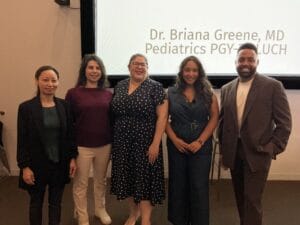
WesternU’s College of Health Sciences held the MSMS Research Symposium on May 6, 2026, in Pomona, California. Briana Greene, MD, presented “Delayed Does Not Mean Denied: Journey to Becoming a Global Physician and Nonprofit CEO.” She talked about the setbacks in her journey to becoming a doctor, and how those delays ended up helping her fulfill her goals.
Dr. Greene took her first trip to Tanzania during her gap year in between undergraduate and medical school. She founded the public charity From Hearts 2 Hands, which provides resources, improves public health and education infrastructure, and spreads joy to children around the globe, particularly in Tanzania. The nonprofit has developed numerous life-changing improvements – building rainwater collection tanks for the Maasai Tribe in Monduli, Tanzania, building wheelchairs for 10 paraplegic children at Kwamkono Disabled Center in Tanga, distributing more than 1,000 reusable sanitary pads for distribution to more than 700 girls in need, and much more – all while she was preparing for and completing medical school.
“There were a lot of delays in my journey, but I feel like they all turned into good,” Greene said. “If you feel like you’ve had delays in your journey, or there might be some failures along the way, that’s OK. You’re in good company. I was there.
“There is so much beauty in learning about a place and people that are different from you,” she added. “Oftentimes we go in thinking I have so much to teach, I have so much to give, but really we have so much to receive and so much to learn as well.”
She encouraged students to be lifelong learners and to keep working toward their goals.
“A delay in your journey doesn’t erase your destination. Sometimes the longer path builds the resilience, grit, and empathy you’ll need as a future health professional,” Greene said.
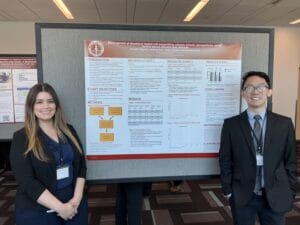
MSMS student Gricelda Negrete said she was inspired by Dr. Greene’s keynote presentation and the question that guides her life, “What is the wrong you were born to right?”
“It was really good, really motivational,” Negrete said. “It really opens your eyes to what more you can do with medicine.”
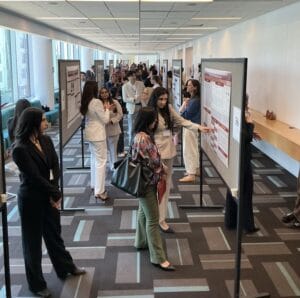
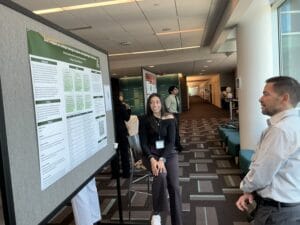
Negrete and her classmates presented their research posters at the symposium. MSMS students Demelza Pierre and Komal Sethi presented “Comparing 2D vs 3D Learning Tools in Neuroanatomy: Student Outcomes and Perceptions,” co-authored with Drs. D. Joshua Cameron and Tammie Keller Johnson.
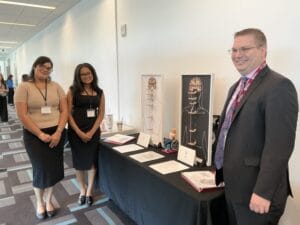
The study showed that 3D models can help students gain confidence and improve their understanding of complex materials.
“I grew a lot in this program, and I’m expecting to grow a lot more going from one program to another,” Sethi said. “I feel the momentum is there and the motivation is there.”
The MSMS program provided the academic rigor she needed to succeed when she enters the College of Optometry in the fall, Pierre said.
“I don’t know if I would be able to perform at the level I need to perform in my first year of optometry school without this program,” Pierre said. “This boosted my confidence.”
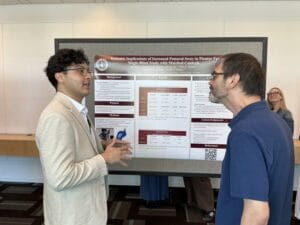
MSMS student Alexander Rosales, who will enter COMP in the fall, said it’s important to understand research as a future clinician.
“Confidently navigating research will help me when I’m a physician. I can propose treatments to my future patients to help better their outcomes,” he said. “I believe that looking at a patient as whole person gives my patient the best care I can, not just putting a Band-Aid on the issue, but actually figuring out what’s going on and how to make their outcomes better.”
“The MSMS Research Symposium is an important example of how student scholarship advances the broader research strategy of the College of Health Sciences,” said CHS Acting Vice Dean Josh Matacotta, PsyD, MA, CAHIMS. “By engaging students in faculty-mentored research, the MSMS program helps strengthen a culture of inquiry, evidence generation, and dissemination across the College. This work supports our commitment to research that improves health outcomes, addresses real-world health care challenges, and prepares students to become thoughtful, evidence-informed leaders in the health professions.”
The MSMS Research Symposium is the culmination of an entire journey for our students, said MSMS Department Chair Jenniffer Licero Campbell, PhD.
“We make it the last event in the curriculum for a purpose; the symposium allows the students to see how far they’ve come and gives them tangible proof of their accomplishments,” Dr. Licero Campbell said. “I am so proud of every single one of our students. Now they know what the Department of Medical Sciences faculty and administrators have known since the time they were accepted into the program: they are more than capable, they belong, and they are ready for the next step in their professional development. I know they are going to be successful, and now they know it too.”