Strengthening Clinical Skills: Discover WesternU’s emphasis on clinical reasoning
by Rodney Tanaka
May 11, 2026
Read 1 mins
As health care continues to grow more complex, the ability to think critically and make sound clinical decisions has never been more essential.
At Western University of Health Sciences, the Master of Science in Physician Assistant Studies (MSPAS) program is evolving to meet this need with the introduction of a new Clinical Reasoning course launching in Fall 2026.
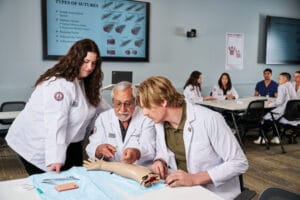
The course emphasizes how students think, not just what they learn, focusing on the cognitive processes underlying clinical decision-making, including hypothesis generation, data interpretation, problem representation, differential diagnosis development, and clinical prioritization.
What sets this approach apart:
- Students will integrate knowledge from anatomy, physiology, pathophysiology, pharmacology, and evidence-based medicine to evaluate case presentations commonly encountered in primary care;
- actively practice transitioning from data collection to clinical judgment through small-group, case-based learning, simulated patient encounters, and guided reflection;
- learn to identify and integrate pertinent positive and negative clinical findings to develop a robust, prioritized differential diagnosis;
- learn how historical information informs the physical exam, how findings guide diagnostic testing, and how clinical data ultimately shape patient-centered management plans;actively engage in concise oral and written case presentations while developing skills in selecting appropriate physical exams and diagnostic tests and formulating safe evidence-based management plans.
Faculty facilitators will guide learners through the reasoning process, encouraging them not only to generate differential diagnoses but also to justify and refine them using clinical evidence and structured thinking.
Importantly, Clinical Reasoning integrates content across courses, bridging clinical medicine (across the life span), physical assessment, and diagnostic medicine and pharmacology to provide a more cohesive and longitudinal learning experience. While elements of clinical reasoning were previously embedded in individual courses, such as Adult Medicine, this new course offers a dedicated, comprehensive space for deliberate practice and skill development.
The Clinical Reasoning course is reflective of the evolution of the MSPAS program as part of a dynamic and growing academic community. Under the leadership of Dean Gail Evans Grayson, EdD, MA, the College of Health Sciences is experiencing renewed energy and forward momentum, driving innovation, strengthening interprofessional collaboration, and advancing health professions education across its programs. Within this environment, the MSPAS program faculty are actively re-envisioning the curriculum to better prepare students for the complexities of modern clinical practice.
MSPAS faculty observed a meaningful shift in how students approach learning and retain medical knowledge. While foundational sciences remain essential, there is an increasing need to intentionally develop clinical reasoning skills early in training. In response, the MSPAS program has moved beyond traditional, one-directional lectures toward active, case-based learning experiences that foster critical thinking and clinical decision-making.
The College of Health Sciences and the MSPAS program view the Clinical Reasoning course as a foundational pillar of our curriculum, one that prepares students for the complexity of clinical practice. It represents our continued commitment to innovation, responsiveness to learner needs, and alignment with the evolving landscape of health care education.
Learn more about WesternU’s MSPAS program: https://www.westernu.edu/health-sciences/programs/master-of-science-in-physician-assistant-studies/