WesternU College of Optometry students present lessons learned in clinical rotations
by Rodney Tanaka
May 10, 2026
Read 1 mins
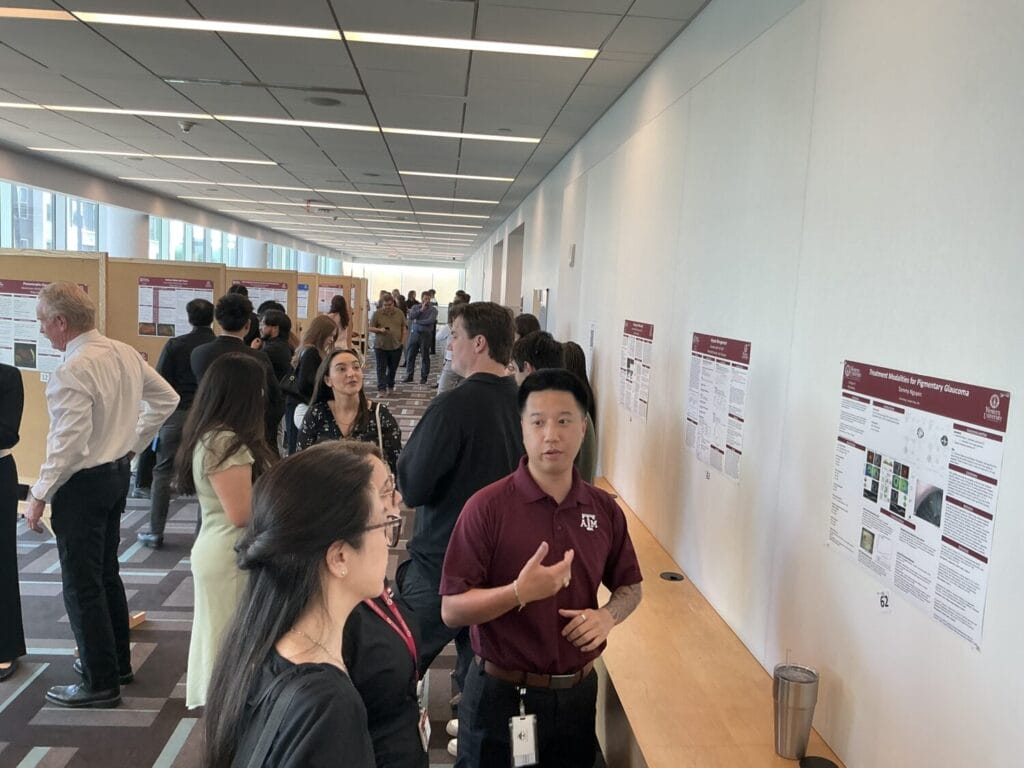
Western University of Health Sciences College of Optometry students presented research posters highlighting evidence-based decision making in clinical practice.
The College of Optometry 3rd Year Poster Walk, held May 5, 2026, on the WesternU California campus in Pomona, Calif., featured research posters developed from students’ conference-quality case reports based on real patients from the WesternU Health Eye Care Institute and affiliated clinical network.
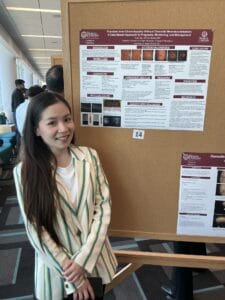
College of Optometry student Tram Ngo presented “Punctate Inner Choroidopathy Without Choroidal Neovascularization: A Case-Based Approach to Prognosis, Monitoring, and Management.” Her poster was based on her rotations in the WesternU Health Eye Care Institute.
“I think the clinical experience helped me to be more confident in dealing with patients,” she said.
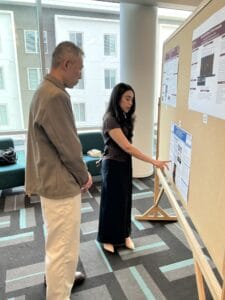
Third-year College of Optometry student Jacqueline Morales presented “Neuroanatomical correlation of visual field loss: stroke vs pituitary adenoma,” co-authored with preceptors Mark Wu, OD, and Alisa Molina, OD. She said this experience taught her the importance of correlating research findings with what you see in the real world. She also appreciated the opportunity to learn more about her classmates’ projects in viewing the other posters.
“They researched things I wouldn’t have thought of,” Morales said. “It helps expand my knowledge and it’s a good way to show how other people’s brains work because they don’t all work the same.”
College of Optometry student Rimon Abraham presented the poster “Optic Nerve Pit and Coloboma,” co-authored with preceptor Mark Wu, OD. He said an important lesson he learned is to be careful of which sources you use for information.
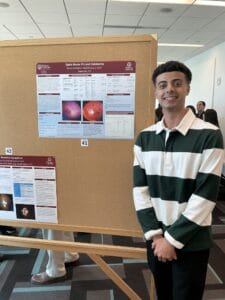
“Some sources led me nowhere,” Abraham said. “Valid sources, with information that relates to my case, helped me have the idea that there are cases all across the world. It’s good to know these rare cases are not just in the U.S.”
Understanding research and how to keep up to date on the latest findings will help him as a clinician.
“It helps a patient trust you more because you’ve done your research. You’re expanding your knowledge a little more. You’re not just limiting your knowledge to what you learned in school,” Abraham said. “It makes patients more comfortable, and it makes you more trustworthy.”
High quality research can be difficult to separate from less impactful or even misleading research which is why all the students were required to have a personal, face to face session a WesternU librarian in order to learn how to differentiate between the two as well as how to apply their previous training in grading the level of research quality.
“In an era of rapid technological advancement and constant innovation in health care, evidence-based decision making is essential to ensure that new tools, treatments, and technologies translate into safe, effective, and high-quality patient care,” said College of Optometry Founding Dean Elizabeth Hoppe, OD, MPH, DrPH. “When our students master this skill, they are fulfilling the WesternU promise to produce the next generation of humanistic health care providers.”