WesternU College of Health Sciences holds Wheelchair and Assistive Technology Extravaganza and EXPO
by Rodney Tanaka
May 1, 2026
Read 1 mins
WesternU College of Health Sciences’ Department of Physical Therapy Education held its annual Pediatric and Neuro Wheelchair and Assistive Technology (AT) Extravaganza on April 17, 2026. Through hands-on, interactive demonstrations, WesternU students gained a greater understanding and appreciation of the technology available to increase mobility and improve quality of life for their future patients.
The event was a showcase of interdisciplinary collaboration and innovation, made possible through the incredible support of the Harris Family Center for Disability and Health Policy (CDHP) and the Pumerantz Library, along with valuable contributions from the Center for Excellence in Teaching and Learning (CETL) and the Campus Bookstore.
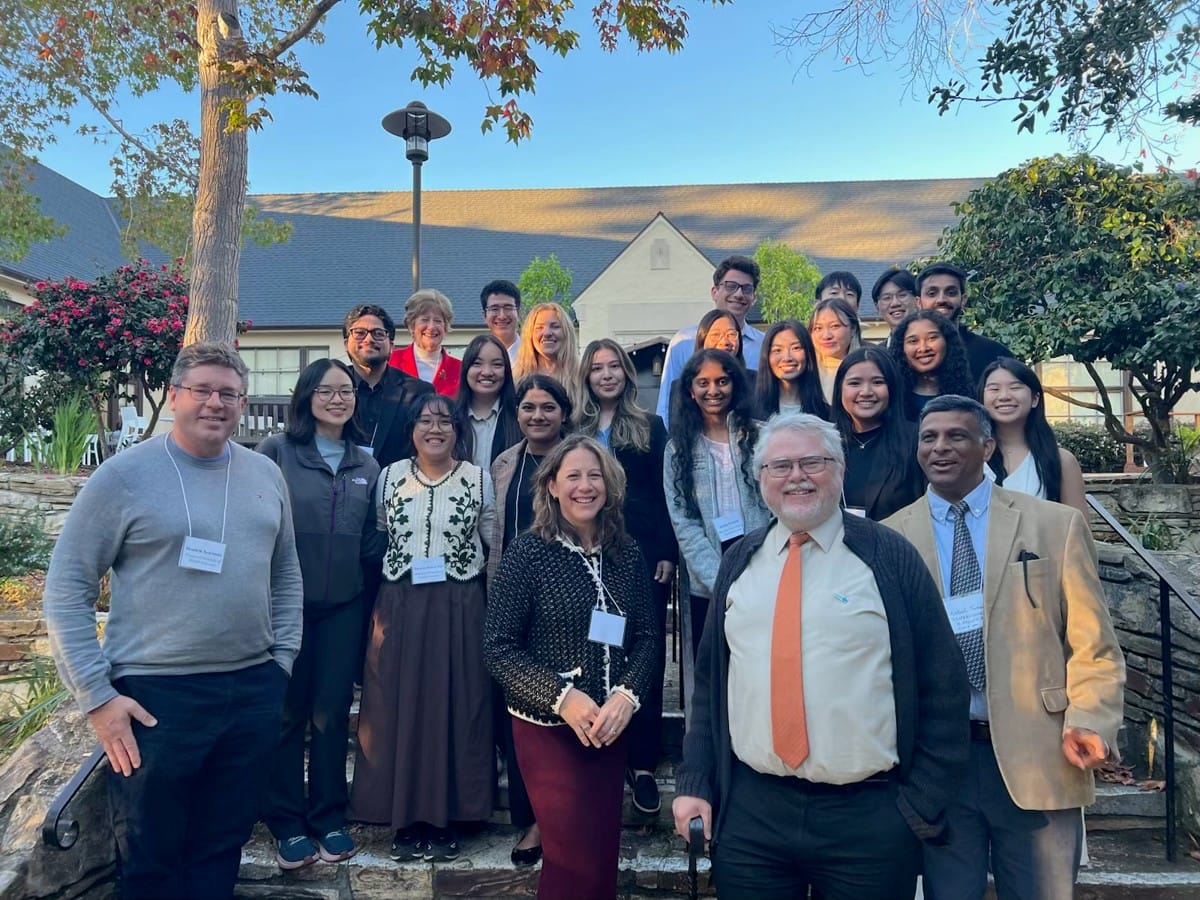
The turnout reflected a wide range of future health care professionals, including CHS faculty, Doctor of Physical Therapy (DPT) students, Physician Assistant (PA) students, and learners from the Master of Science in Medical Sciences program, the colleges of Podiatric Medicine and Optometry, and visiting UCLA pre-health students. This diverse participation created a dynamic learning environment centered on patient-centered care and innovation.
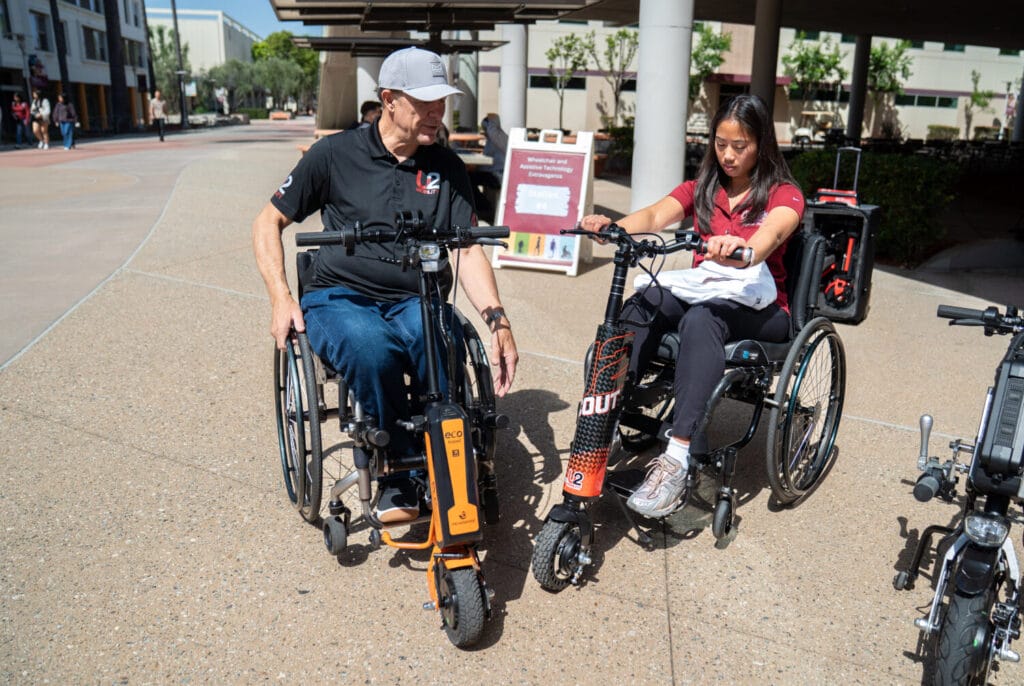
To enhance engagement, DPT and PA students participated in an interactive “passport” activity, visiting and learning from each vendor and educational station throughout the Expo. The event featured more than 20 exhibitor tables in the Recital Hall, complemented by five hands-on educational stations focused on assistive technology, neurological and pediatric durable medical equipment, adaptive gaming, medical supplies, and a wide range of mobility solutions—including manual, sports, power, and power-assist wheelchairs available for live trials.
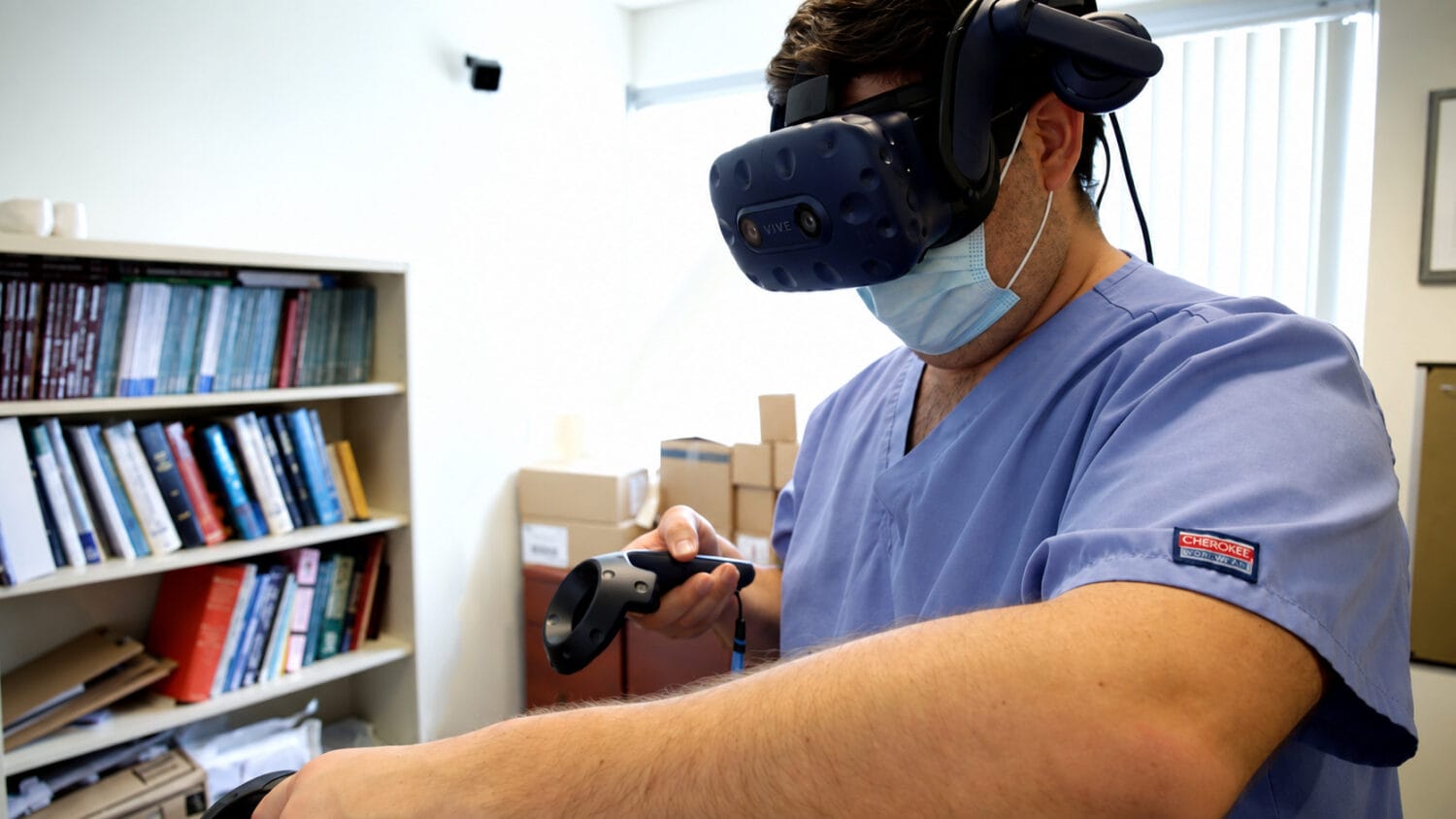
Attendees were exposed to cutting-edge advancements transforming rehabilitation, including gamification approaches for stroke recovery using robotics designed to increase repetition, engagement, and ultimately improve outcomes by helping patients break through traditional recovery plateaus. Organizations such as the Neuro Recovery Institute demonstrated immersive, technology-driven therapy systems, including virtual reality-integrated cycling and neurorehabilitation platforms.
The Expo also highlighted critical support services for individuals living with complex neurological conditions such as Guillain-Barré syndrome (GBS), chronic inflammatory demyelinating polyneuropathy (CIDP), spinal cord injury (SCI), and ALS. Community partners, including Triumph Foundation and the ALS Network, provided valuable education and resources to help patients and families navigate care beyond the clinic.
Additional highlights included adaptive gaming demonstrations, therapy dogs that brought energy and comfort to the event, and an accessible vehicle showcase from United Access, giving attendees firsthand exposure to real-world mobility solutions.
Overall, the event not only introduced students to the latest advancements in assistive technology and rehabilitation but also reinforced the importance of interdisciplinary collaboration, community resources, and innovation in improving the quality of life and outcomes for individuals with neurological and pediatric conditions.
Students were appreciative of the opportunity to learn how to operate the various technology presented. Second-year DPT student Brenda Ponce used eye movements to steer a wheelchair.
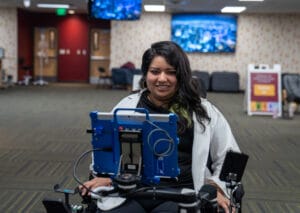
“It took a little adjusting to engage how I wanted to turn. Once I got used to looking at the arrows, driving was a little smoother,” Ponce said. “As a future physical therapist, it’s really cool not only learning how the chair is used, but learning about the different capabilities patients may have.”
Hands-on experience makes a difference, she said.
“We have to be able to tell our patients what’s out there,” Ponce said. “Letting them know the world can be at their fingertips, or their eye gaze, is a lot more empowering.”
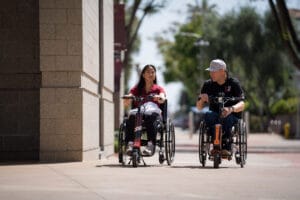
Second-year DPT student Alyssa Pimentel test-drove a power assist attachment that turns a manual wheelchair into speedy, motorized one.
“It’s invigorating. Imagine how it would feel to go from only a manual wheelchair to then have all this freedom,” she said. “It definitely opens my eyes to giving patients more autonomy with assistive devices that are customizable. It’s empowering for me to have this connection as a future provider.”
At a minimum, the event aims to expose students to the current standard of care, as well as the wide range of assistive technologies and specialized durable medical equipment available for pediatric and neurological populations. This includes individuals living with conditions such as cerebral palsy, autism, developmental delays, muscular dystrophy, ALS, stroke, traumatic brain injury, Parkinson’s disease, Guillain-Barré syndrome, and more, said CHS Assistant Professor Tammie Keller Johnson, PT, DPT, PhD, NCS, ATP, CBIS, MS.
“Even for those who do not ultimately specialize in these areas, the experience equips future health care professionals with the knowledge to better educate patients and families, recognize when referrals to specialty clinics are needed, and connect individuals with valuable support services and community resources,” she said. “By building this foundation of awareness and advocacy, students are better prepared to help improve quality of life, optimize patient outcomes, and provide meaningful support to patients and families navigating some of their most challenging moments.”