WesternU’s One Health Symposium highlights connections between animal, human, and environmental health
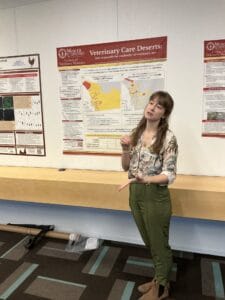
Western University of Health Sciences’ recent 2025 One Health Day Symposium sought connections among the worlds of animal, human, and environmental health, this year with a special focus on food.
Margrethe “Gretchen” Andreasen, MSc, DVM Class of 2028, one of the student organizers from the Student American Veterinary Medical Association, said that the overarching nutritional issues affecting the planet and its inhabitants cannot be solved in silos.
The symposium showed “the interconnectedness between human health, environmental health, and animal health—which is deeply important in veterinary medicine—but also in human medicine, environmental research, and so much more,” she said.
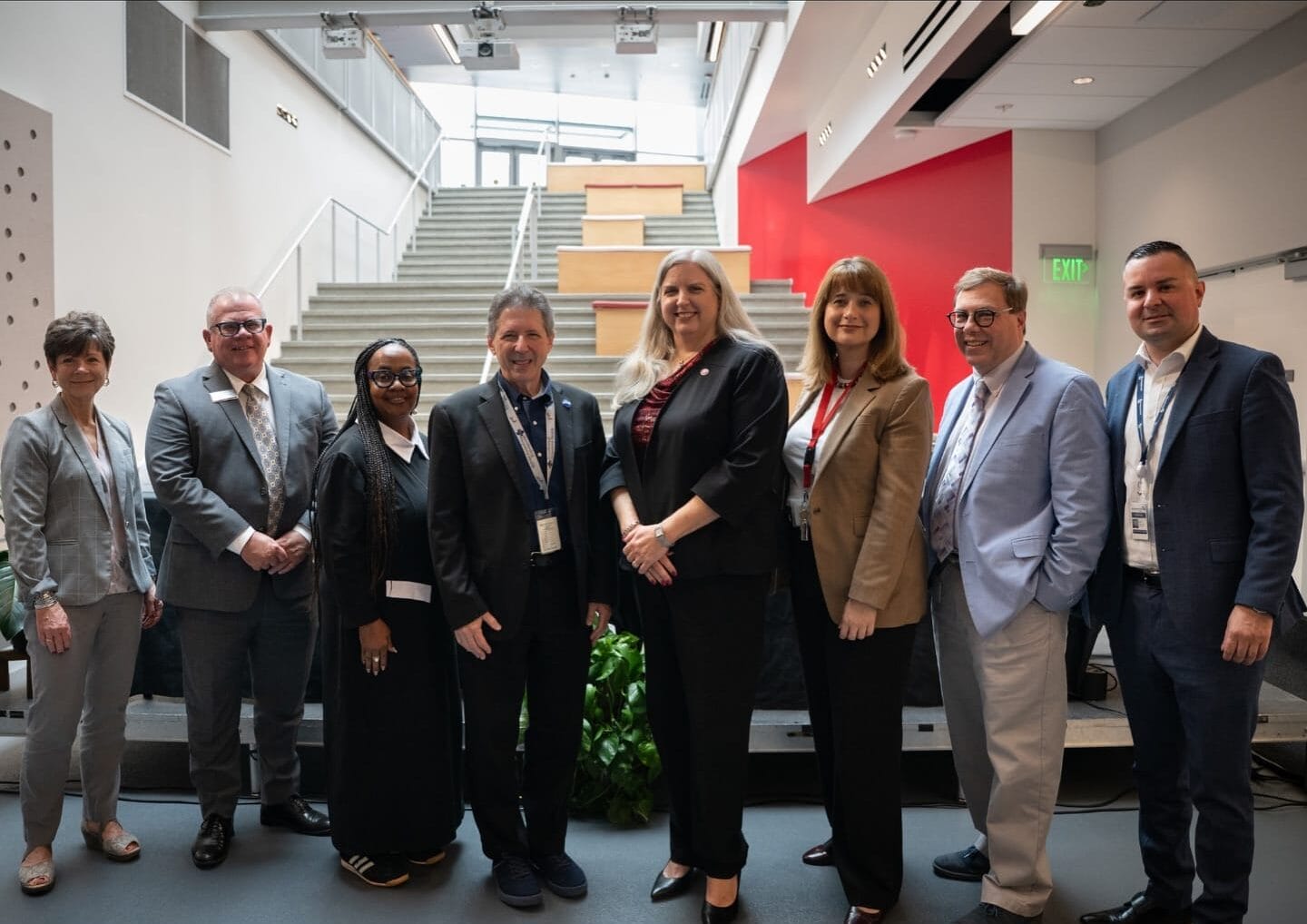
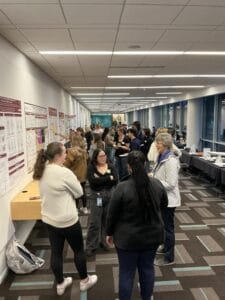
The event, held Nov. 14, 2025 in the Health Education Center, drew nearly 80 attendees. Although organized by the College of Veterinary Medicine since its WesternU inception nearly a decade ago, the symposium drew speakers and attendees from beyond the college’s and WesternU’s doors. Speakers from the WesternU CVM, UC Riverside, Cal Poly Pomona, and Pitzer College came together to present their research and projects surrounding food and discuss how their work intersects and overlaps. Similarly diverse were those in attendance, representing faculty, staff, and students from the CVM, WesternU College of Optometry, and College of Graduate Nursing, as well as from five other regional colleges and universities.
One Health is inclusive. “There isn’t a set definition of One Health,” said WesternU CVM Associate Professor Rhea Hanselmann, DVM, MPVM, PhD, co-organizer of the event. “I think of One Health as an umbrella. It is an overarching concept that includes so many different disciplines, all with a shared goal: to optimize health and wellbeing for humans, animals, and the environment.”
“We need to work together,” Dr. Hanselmann added. “We need to communicate and collaborate beyond our silos.”
WesternU CVM Professor Andrea Fidgett, MSc, PhD, the event’s other faculty co-organizer, agreed that the need for communication between disciplines, colleges, and programs is essential for a healthier planet.
“It’s my personal belief that embracing the One Health approach is critical for all human and animal health students,” she said in an email, adding that it is important “for WesternU to train agile and impactful leaders equipped for a complex, inclusive, and thriving future.”
Experts from across the spectrum presented their particular health and nutrition projects during the symposium.
“The opportunity and—dare I say—obligation to work with our community through combined human and animal clinics locally would be amazing,” she added.
Pitzer College Professor of Environmental Analysis Susan A. Phillips, PhD, set the stage for the discussion by spotlighting a major project of Pitzer’s Robert Redford Conservancy. SoCal Earth is a massive open-source website that gathers environmental data and produces a variety of web tools that can be used to help navigate the health issues confronting the region.
“We are really interested both in putting people in touch with the landscape and the data about Southern California so they can intervene,” she said, adding that the site allows anyone to study health and climate data and “ultimately become experts.”
Southern California suffers from rapid development and expansion, which has exacerbated climate change. “We actually control our built environment; that is what we have a choice about,” Dr. Phillips noted.
CVM Professor of Microbial Ecology Brian Oakley, PhD, studied how altering the gut microbiome in chickens can improve their overall health, potentially leading to a better food animal for consumption. Access to nutritious food could be strengthened through the development of more resilient food sources.
Based on Dr. Oakley’s findings, improving the chicken’s health could be better for both the environment and the food system. “I think this is an exciting new area, and I think that we can actually use a lot of the tools of microbiome sciences to optimize the gut microbiomes of food animals and make them more sustainable,” he said.
Sustainability and availability of food sources is critical for both humans and animals.
Fatheema Subhan, MPhil, PhD, RDN, Associate Professor at California State Polytechnic University, Pomona, discussed how poor nutrition results in increased chronic disease. Her work focuses on increasing high-quality nutrition access for ethnic minority communities in Southern California through a combination of education and intervention programs tailored specifically by and for target communities.
Better nutrition at the local level is also the goal of a program launched by the UC Riverside School of Medicine Department of Social Medicine, Population, & Public Health. Jacqueline Moreira, BS, Community Engagement Coordinator at Unidas por Salud, has been working with the rural Latinx population through its “Eat, Move, and Live” program to bring better nutrition—as well as improved physical fitness—to their communities.
Moreira said the program has experienced some success, by utilizing foods that are commonplace and embraced in Latinx kitchens and by using health outreach workers from area neighborhoods to spread the word.
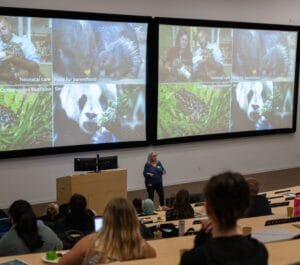
Finding the right type of nutritious foods also is an issue for zoos. Dr. Fidgett joined WesternU’s CVM this summer from the San Diego Zoo Wildlife Alliance where she directed the feeding of hundreds of species. Finding the right food that was both good for the environment and the animal was an ongoing challenge.
“Clearly how we eat and how we feed other animals is less of a supply chain issue, and more of a web,” she said. “It really takes a systems approach.”
Changing agriculture globally to meet the needs of both humans and animals, without contributing to climate change and other environmental problems, is one of the next great challenges faced by humankind, she concluded.
WesternU CVM students understand the importance of a One Health approach to disease prevention and environmental health. Chloe Lee, DVM Class of 2028, said that One Health should help join WesternU’s different health professions programs.
“One Health connects all the health professions and non-health professions together and shows the interconnections between plants, humans, and animals and how we can all take and learn from each other and grow by working as a team,” she said.
WesternU’s One Health Day Symposium was initiated eight years ago by Suzana Tkalcic, DVM, PhD. It is part of World One Health Day , which takes place on November 3 every year and is celebrated with events across the globe.
Tallyn Burton, DVM Class of 2028, another student organizer, said an event like WesternU’s One Health Symposium is an ideal project for the University as a whole.
“I always love when our colleges and neighboring universities take an interdisciplinary approach and work together to address shared challenges,” she said. “Hearing students, faculty, and community partners engage with these topics reinforced why the One Health perspective is so important to me and why I value creating spaces where collaboration can lead to meaningful solutions.”