WesternU Optometry-Nursing collaboration empowers nursing students through community health program
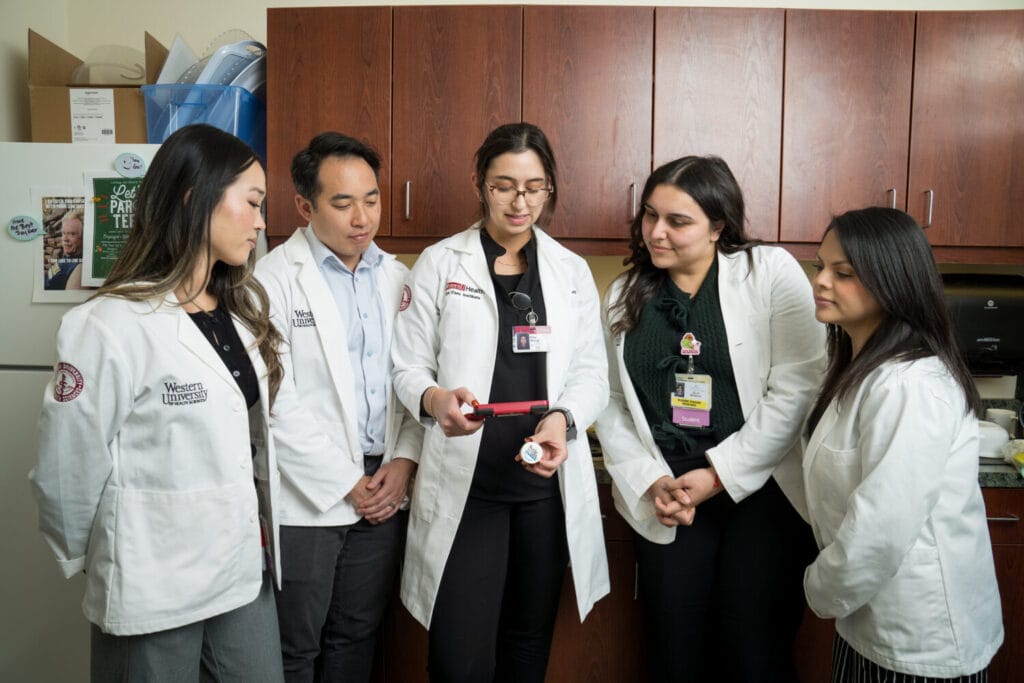
An interprofessional collaboration between the College of Optometry and the College of Graduate Nursing at Western University of Health Sciences embeds nursing students into the daily lives of WesternU Eye Care Institute patients with visual impairments to help them become more independent.
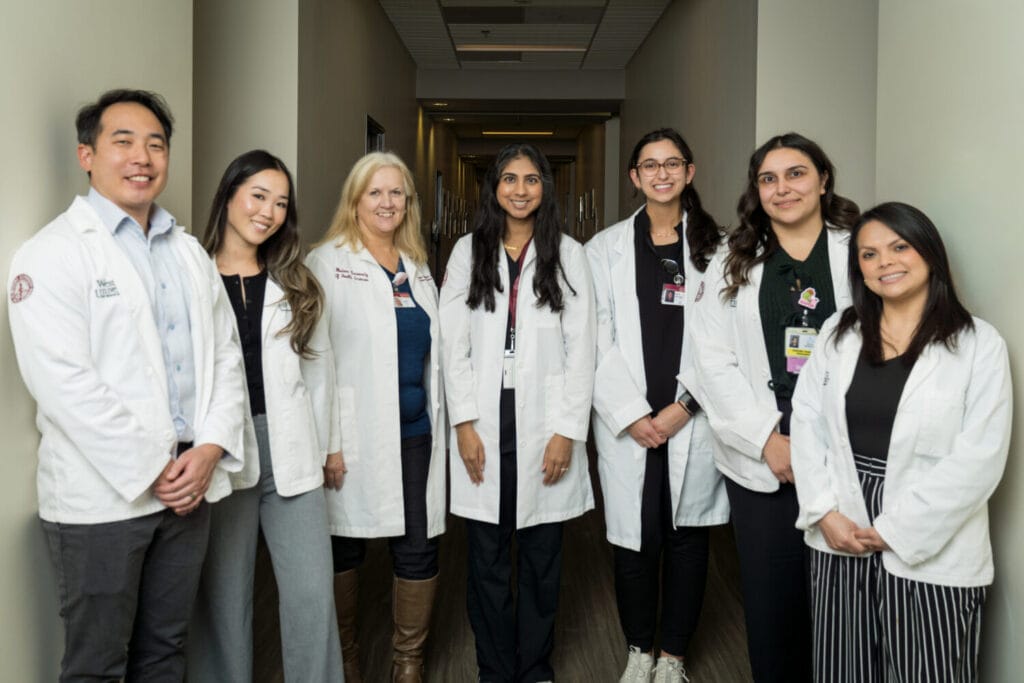
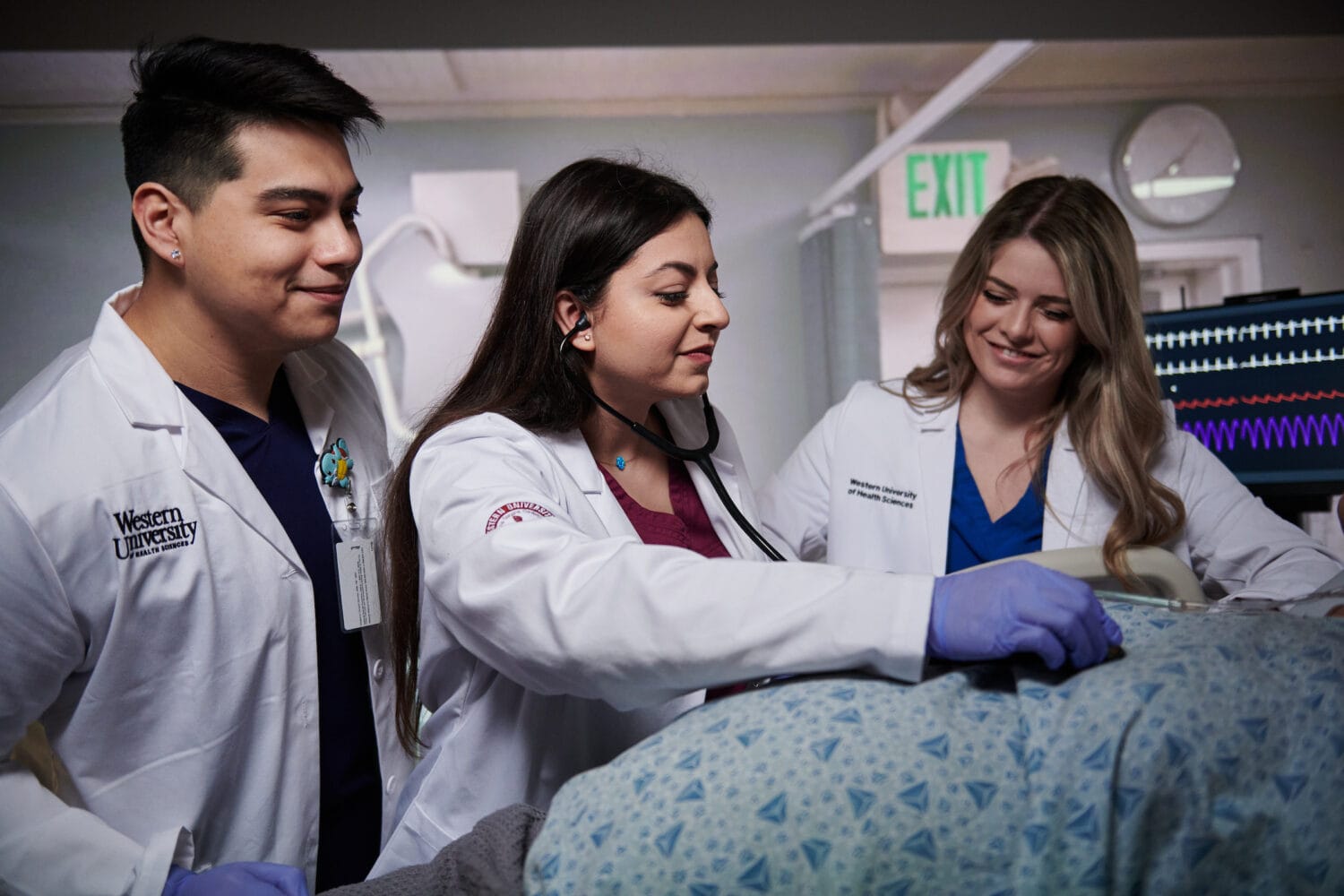
Each fall, four Master of Science in Nursing-Entry (MSN-E) students complete a one-semester public health and population-based nursing course with Independent Living Skills (ILS) Specialist Laura Valencia and Clinical Assistant Professor Tina Mac Donald, OD, CDCES, FAAO, at the WesternU Health Eye Care Institute – Los Angeles. This course is required for students to get their Public Health Nursing qualification from the Board of Registered Nurses post RN licensure.
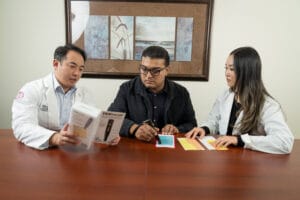
Valencia and Mac Donald introduced the nursing students to common activities of daily living (ADLs), low vision conditions and their effect on ADLs, and ILS strategies to achieve functional goals, said College of Optometry Chief of Vision Rehabilitation and Assistant Professor Serena Sukhija, OD, FAAO. The MSN-E students then visited their patients’ homes, using information from the low-vision optometrists such as visual acuity, visual field, and the patient’s eye condition to develop a problem list with the patient. The students take that information and develop a plan with the certified ILS instructor to address the ADLs. Nursing students then visit patients in their home or on site at the optometry clinic and provide training and produce reports regarding client success, Sukhija said.
“This has been a really wonderful collaboration between graduate nursing and optometry to bring this much needed service to our community members,” Sukhija said. “The patients are becoming much more independent in their daily lives, thus creating a better quality of life.
“We cannot do what we do in our own siloes. We have to work with other health care professionals,” Sukhija added. “Everyone is a learner. (Nursing students) take information from us and use that information out in the field. Our optometry students and nursing students are very alike in that piece of their education. But the perspective they take away is different. Optometry students are focusing on the health of the eye and rehabilitation of the eye. Nursing students are focusing on taking that information and adapting it to help the patient with independent living skills.”
The four MSN-E students who recently completed this fall course in the Eye Care Institute-LA are Selin Mandani, James Shimoda, Dahee Jung and Diana Navarro. This course provided a different experience compared to their hospital-based rotations, Jung said.
“We are working with patients in their homes and helping them gain more independence,” she said. “We worked on independent living skills with them and advocated for them.”
The students learned a lot from the optometry team at the Eye Care Institute, Mandani said.
“It was eye-opening experience. I definitely will have more sensitivity going forward,” Mandani said. “Now we see the different struggles people go through on a day-to-day basis. To see these people struggle was hard at first, but knowing we did our little part to help them was rewarding.”
The nursing students worked with patients over an 11-week period, building a trusting relationship with these patients as well as their caregivers.
“You can see that when we taught them skills to be more independent, it helped their parents out as well,” Shimoda said. “The parents were really grateful for that.”
The CGN students helped their patients navigate public settings such as coffee shops and the library.
“It was cool to see and experience,” Mandani said. “For our clients, it was rewarding for them to navigate without their primary caregivers. It was interesting to go through these experiences through their eyes, how they have to adapt. We have more empathy toward them, especially the kids we were following. Throughout our process we saw him open up and become more sociable.”
The students adapted their approach based on feedback from their patients.
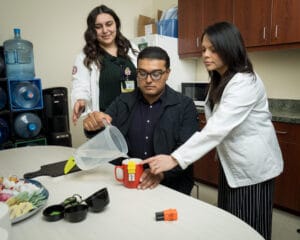
“Our teaching plans were based on their goals, the things they wanted to improve,” Jung said. One of her clients really liked to cook, so she ordered adaptive tools for the kitchen that had safety mechanisms for low vision.
“We cooked with and tested out the tools with them so they knew how to use them once we finished our rotation,” Jung said.
MSN-E student Diana Navarro said this training has affected how she approaches patient care. While working in a hospital, a patient noted they have a vision impairment. Navarro realized this affected their comfort during the exam.
“His visual impairment caused him to be sensitive to the eye exam light,” Navarro said. “Me bringing that into the nursing world at a hospital made me more aware of not just what going on specifically with vision but with them as a whole person.”
This collaboration was born from conversations between CGN Associate Professor Ruth Trudgeon, DNP, RN, and College of Optometry Assistant Dean of Clinical Affairs and Residency Director Loretta Ng, OD, FAAO, FNAP, during WesternU’s COVID-19 vaccine clinics held during the pandemic. They talked about other ways the two colleges could work together.
“Health care is a team sport,” Trudgeon said. “We know that working interprofessionally teaches students really good skills. In this respect, nursing students are able to work alongside optometrists and optometry students to learn from each other.”
Public health happens everywhere, in different settings, Trudgeon said. It’s important for students to see patients in the community.
“If students have a better understanding of what patients may have to face in the community, it makes them more effective nurses,” she said.
Without vision, you cannot access the world properly, Ng said.
“So having good, comfortable, clear vision is important to be able to be healthy in all aspects – mental health, physical health, socioeconomic health. All are impacted by the quality of your vision. Vision health should be considered primary care, not a specialty,” Ng said. “It’s a right for every individual. When we are working with individuals who have compromised vision, we are trying to give them back that right, so they can live as independently as they can. This not only helps with their vision, but it also gives them a sense of purpose and independence, which is hugely important for mental heath.”