WesternU College of Graduate Nursing unveils outdoor community kitchen at Lopez Urban Farm
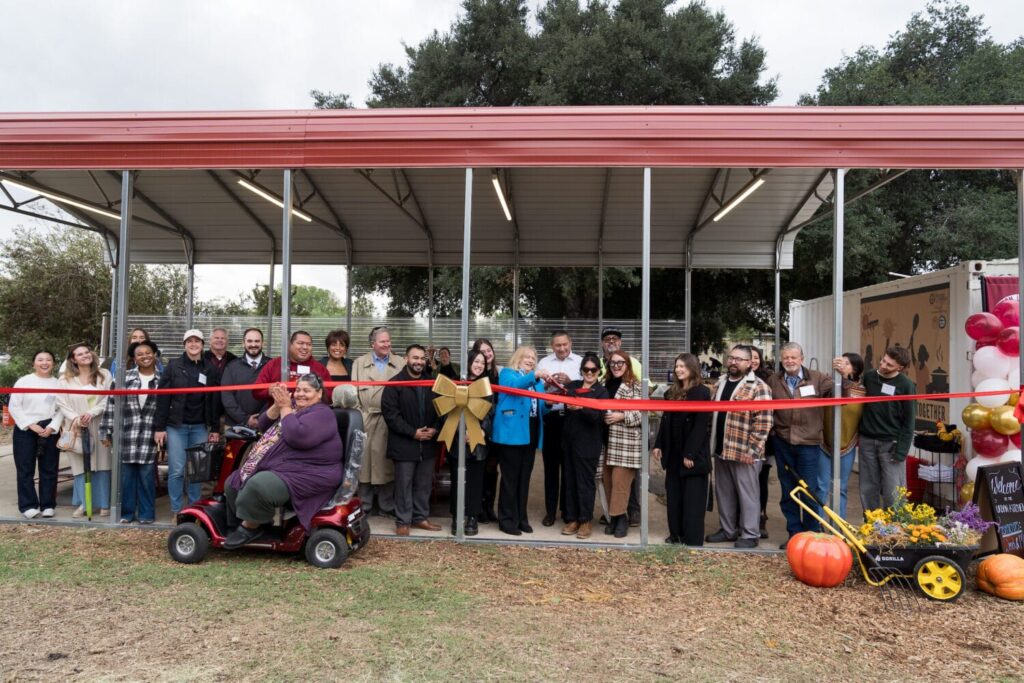
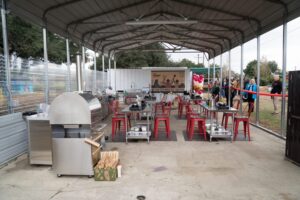
Western University of Health Sciences’ College of Graduate Nursing, in collaboration with Lopez Urban Farm and the Pomona Unified School District, celebrated the opening of the Urban Kitchen, an outdoor community kitchen designed to bring community, education and wellness together.
The Outdoor Community Kitchen is a shared space at Lopez Urban Farm in Pomona, California, where students, faculty and community partners can collaborate, address public health challenges, and co-create solutions through innovation and partnership. The ribbon cutting took place Nov. 20, 2025, with several community partners in attendance, including Pomona Mayor Tim Sandoval and Pomona City Councilman Victor Preciado.
CGN Dean Mary Lopez, PhD, MSN, RN, approved the use of grant funds earmarked to train nurses to provide care to medically underserved areas.
“This project would not have been possible without the Dean’s leadership and commitment. When she approached me seeking to fund a project rooted in humanism and aligned with the College’s mission to advance nursing education, through a humanistic approach, to enhance health equity and quality of life, Dr. Mary Lopez created the opportunity that finally allowed this long-standing vision to move forward,” said CGN Assistant Professor and Humanism Officer Marsha Guillaume, MPH. “With the funding she awarded, I was able to secure essential kitchen supplies and begin laying the foundation for what is now becoming a sustainable community resource.”
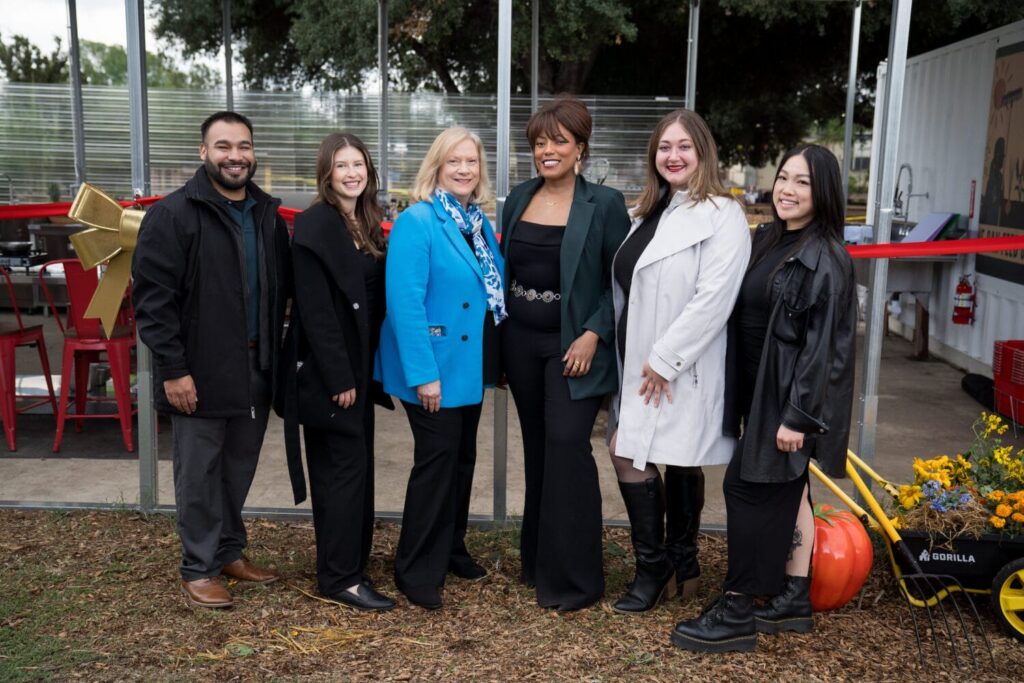
In fall 2025, four Master of Science in Nursing-Entry (MSN-E) students – Julia Simons, Francisco Velasquez, Danielle Nguyen and Marina Tamayo – were hand-selected based on their academic excellence and strong faculty impressions to complete a clinical rotation at Lopez Urban Farm under the guidance of Assistant Professor Guillaume and CGN Associate Professor Ruth Trudgeon, DNP, RN. The clinical rotation was intentionally designed to immerse them in the real health inequities WesternU is committed to addressing.
“Over several months, students examined how structural inequality, community disinvestment, and systemic barriers shape health outcomes in Pomona. As future nurses, they explored humanistic care, preventive strategies, and lifestyle medicine as tools to shift health trajectories for marginalized populations,” Guillaume said. “They supported the development and launch of the first community outdoor kitchen in Pomona, a project aimed at enhancing nutrition security, promoting healthy eating habits, and addressing childhood obesity.”
Students engaged in hands-on, community-centered activities paired with coursework in food systems, food justice, nutrition equity, targeted universalism, social and political determinants of health, and health equity. This clinical was structured to allow students to contribute meaningfully to a real-world initiative, culminating in the student-supported ribbon-cutting ceremony marking the public launch of the outdoor kitchen. Through this experience, they strengthened leadership, analytical, and project-planning skills while supporting a long-term, community-led health initiative.
“This project makes a difference in so many people’s lives. I’m so proud to be part of it and to have the College of Graduate Nursing at WesternU incorporate our community, our clinical partners and the University into a project that is going to help so many people,” Dean Lopez said. “And it’s going to help people not only today, but it’s going to help them in a sustained manner. This outdoor kitchen embodies collective impact in action showing that it’s possible to have our local partners and our community members come together in a place for sustainable action.”
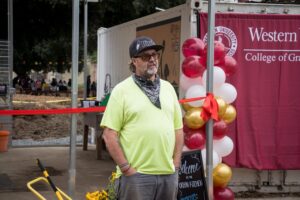
CGN and Lopez Urban Farm have been working together for 10 years, and this partnership serves as a model for every other partnership that has followed, said Farmer Stephen Yorba, founder and executive director of Community Partners 4 Innovation.
“Our organization and our work is built on radical cooperation and partnership. We do nothing by ourselves. Everything you see here is a product of a relationship we have with someone in the local community,” he said. “This is how we come together alongside community. We don’t oppress our way into the community or dictate what goes on, but we come alongside and listen and sit with and relate with folks on the ground. That’s how we ascertain needs, and then we selectively use our resources to help meet those needs.”
This kitchen has been a long time coming – 10 years in the making.
“What we’re trying to do is close the circle in regenerative farming. The closer we can bring folks to their food and immediately bring it from that source into a kitchen and then immediately serve it at the table, the better chance we have of creating a nutritious, health valued, sustainable system that can build healthier lives,” Yorba said. “These nurses will go to work in careers on the back end of a catastrophe – from the way Americans are eating, and the fallout from that – but they have also committed their time on the front end making sure people are eating the best food they possibly can in the heathiest way they can so they can alleviate the bedside stuff that they have to deal with because we know there’s an epidemic in this country.
“Bringing the production of food back in the community where we can partake of the growing of it, and the preparation of it, and the communal sharing and eating. I think that’s the way we heal communities of a lot of things,” Yorba added.
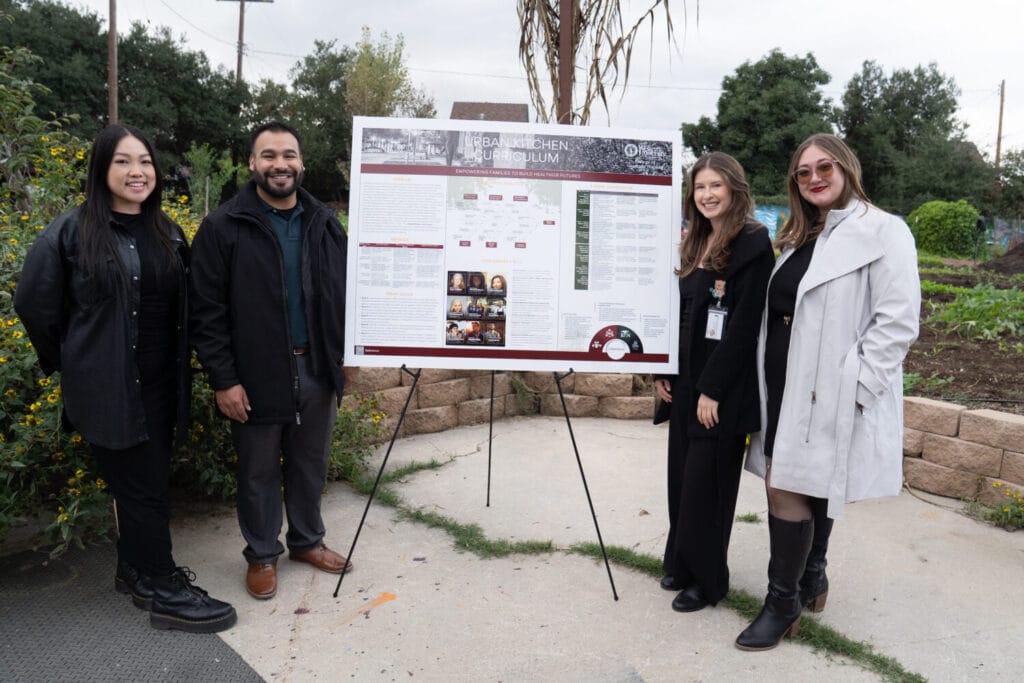
CGN student Francisco Velasquez said this project came about as they assessed the best ways to assist Pomona residents while also tackling the national issue of childhood obesity. CGN will organize an eight-week curriculum that teaches the basics of cooking and nutrition.
“The goal is to increase the health literacy of the adults who provide meals at home,” Velasquez said.
CGN student Danielle Nguyen said she grew up in Ontario and would often visit Pomona to attend art and music events.
“This is a full circle moment for me. Being able to go from visiting Pomona as a teenager to now giving back to the community in a meaningful and sustainable way means a lot to me,” Nguyen said. “This experience taught me a lot about not just the people I’m serving as a future nurse, but how to meet them where they’re at, and to move forward with kindness and empathy.”
She has an externship in an emergency department, where she sees firsthand where health care is falling short in terms of education and health literacy.
“As a future ER nurse, I want to provide proactive solutions to help my community,” Nguyen said.
CGN student Marina Tamayo said she feels like they learned and accomplished so much over the course of three months putting this program together.
“Being part of this project has meant a lot to me. I’ve learned that creating a truly sustainable program involves a deep level of collaboration within the community. This program wouldn’t have been possible without honoring the people within the community, listening to their voices, and understanding the challenges they’re facing.” Tamayo said.
CGN student Julia Simons said what she will remember most about this project is the sense of community and connection in Pomona.
“The community aspect is so strong. I loved being part of that and facilitating that as well,” Simons said. “The amount of teamwork we had to do has been amazing, seeing how everyone came together.”
Her goal is to become a NICU (Neonatal Intensive Care Unit) nurse, and she views this project as an extension of that future care.
“Through this experience, I’ve seen how needed it is to provide education for the community, [and] to provide hope and a joyful place for them to come,” Simons said. “We see how everything is interconnected. Wanting to work in the NICU, at the root of that is community. What is the community they get to grow up in? I hope they grow up where parents can be more educated about health and nutrition.”