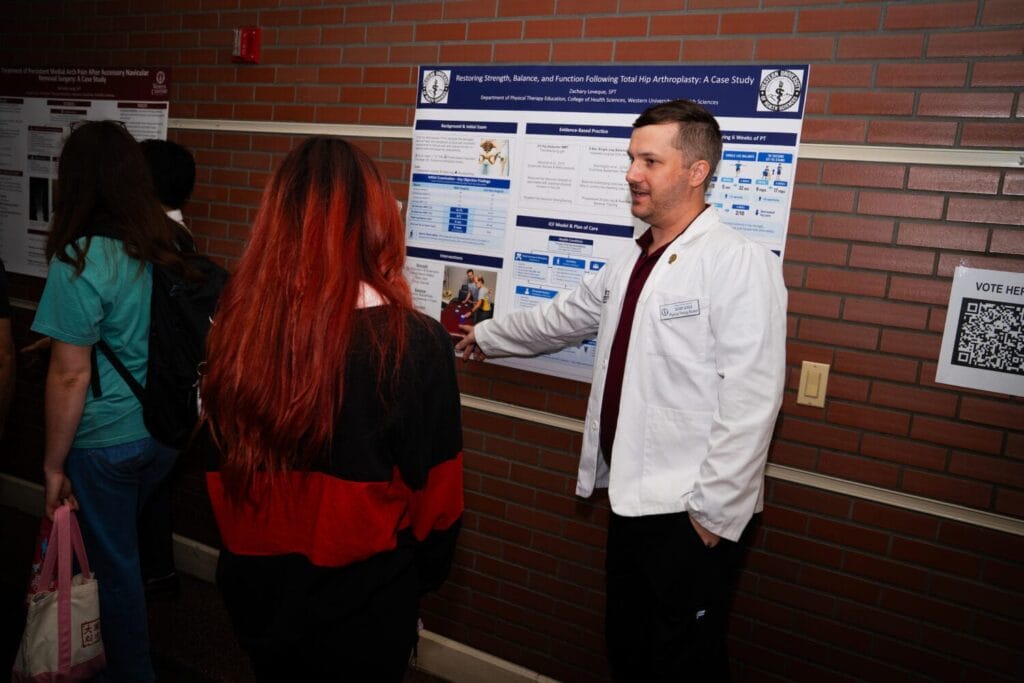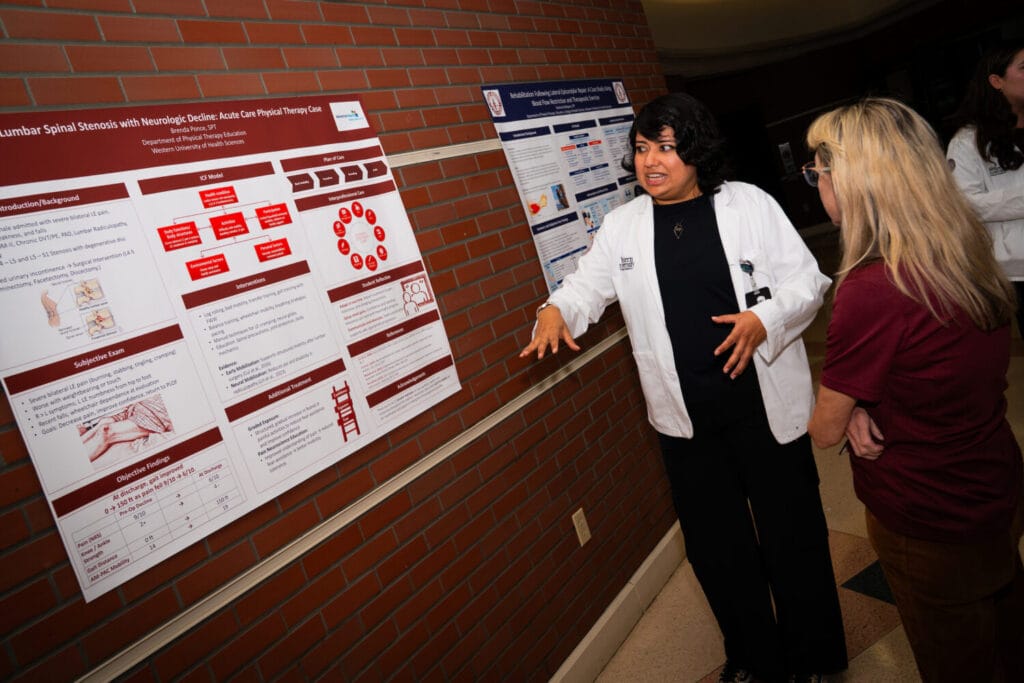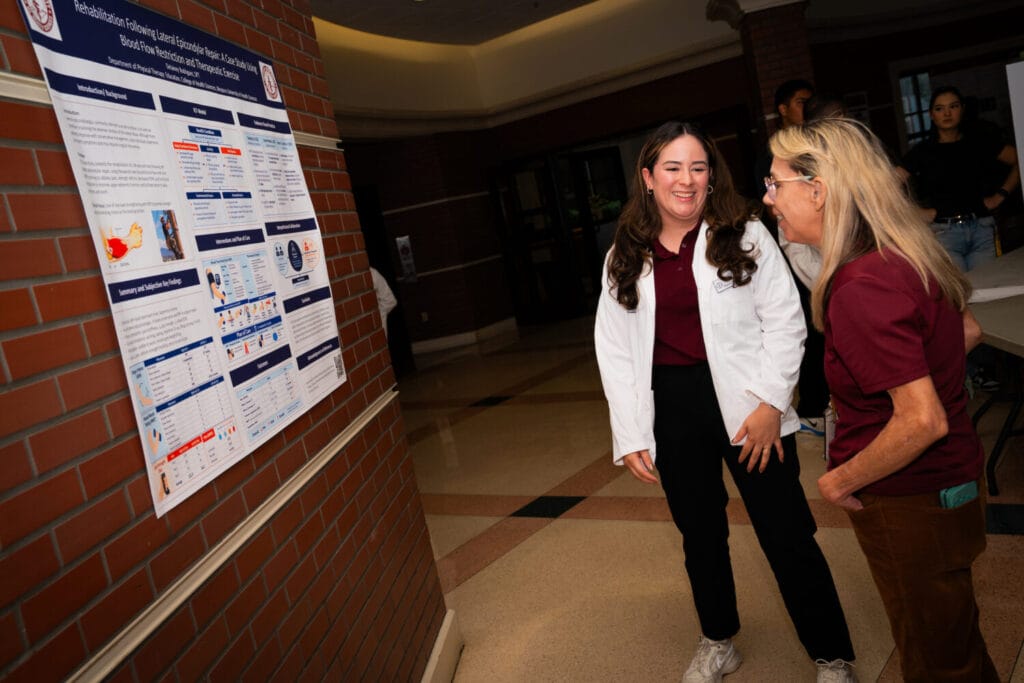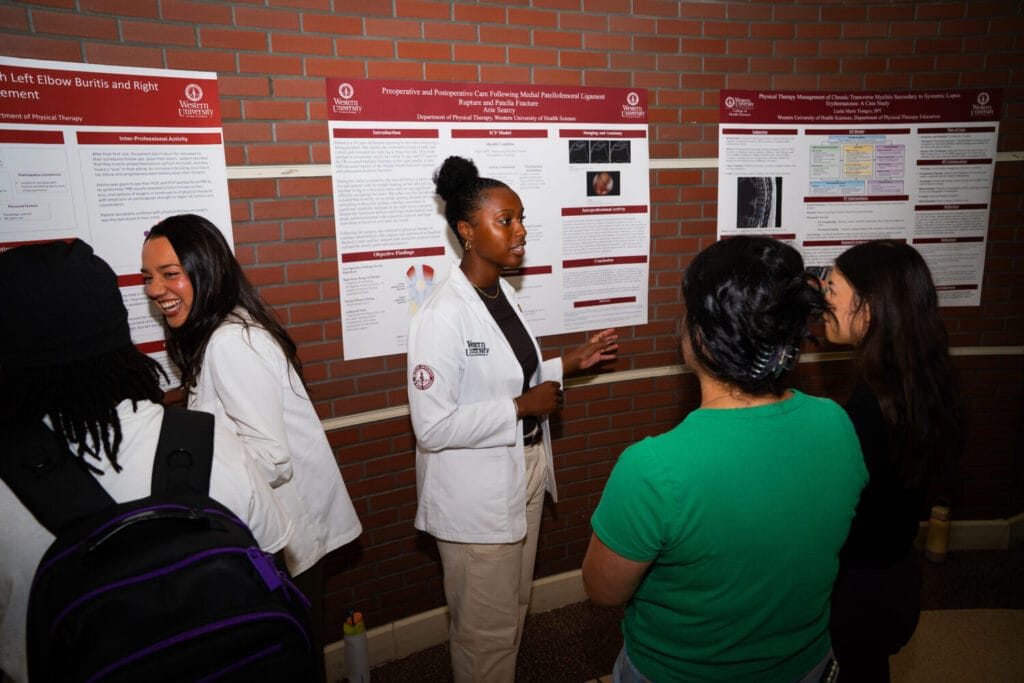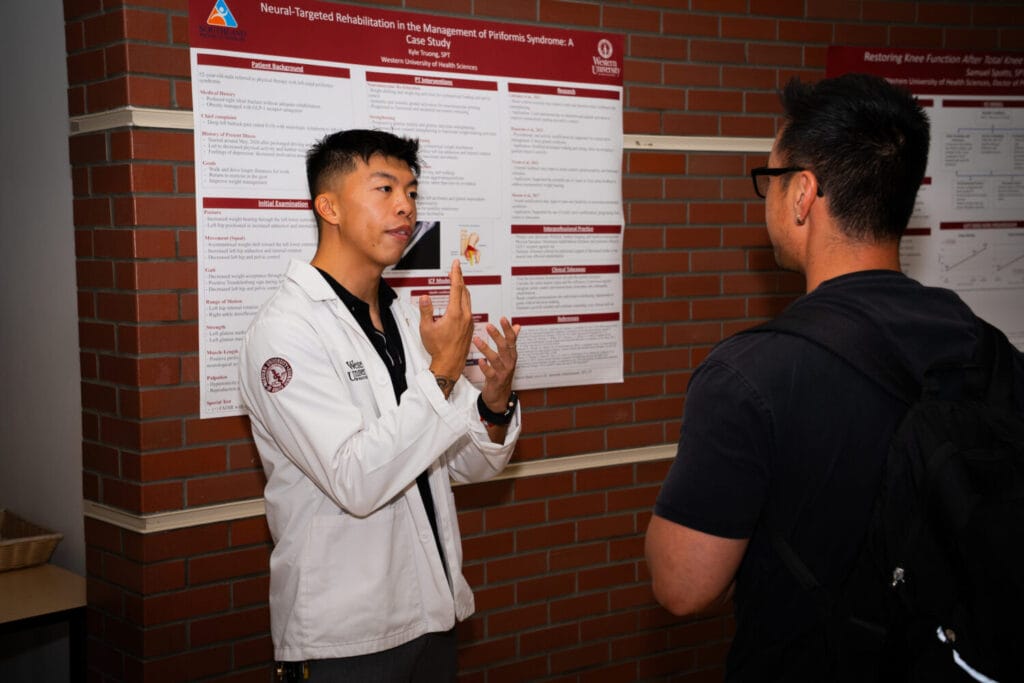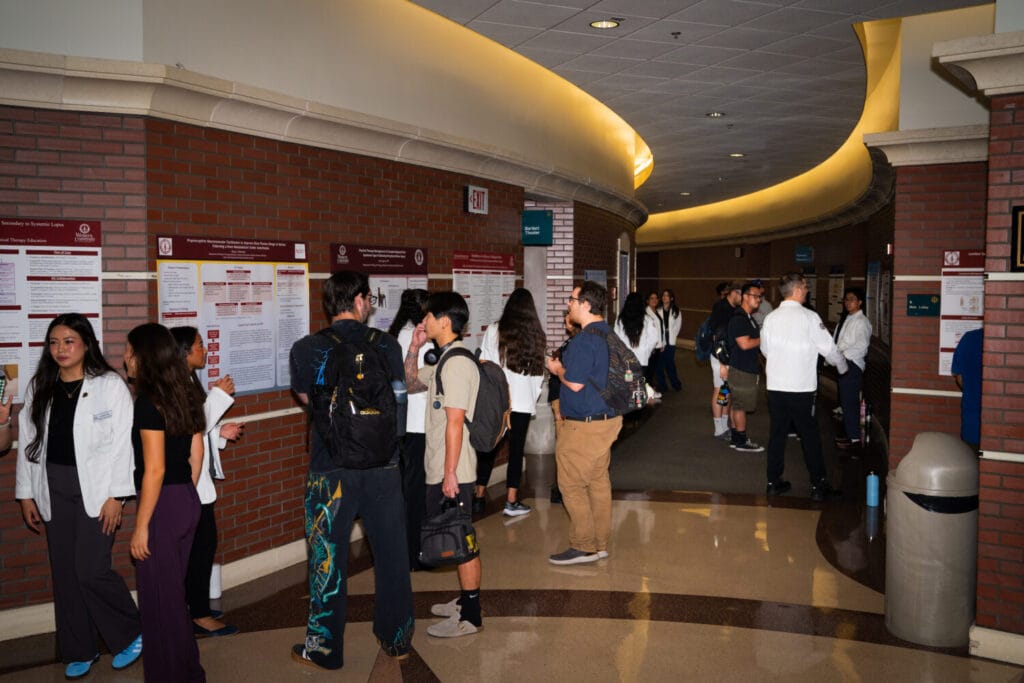
Western University of Health Sciences College of Health Sciences students in the Doctor of Physical Therapy (DPT) program presented case study posters Oct. 7, 2026, showing the patient outcomes from clinical rotations. Students were proud to show the progress made under their care and the bonds built over a sustained period of interaction.
“I am incredibly proud of our DPT Class of 2027. The dedication they demonstrated throughout their clinical rotations was equally evident in the way they presented their work,” said CHS Department of Physical Therapy Education Assistant Professor and Acting Director of Clinical Education Garrett Masada, PT, DPT ’19, OCS. “They represented themselves, our DPT program, the College of Health Sciences, and Western University of Health Sciences with professionalism, confidence, and pride. I hope they take a moment to recognize how much they have accomplished and feel as proud of themselves as we are of them.”
The third-year DPT students each selected a case from their clinical rotations. DPT student Delainey Rodriguez said she met her patient during the first week of her clinical rotation. She worked with him twice a week for 10 weeks.
“We added new exercises to be able to progress him,” she said. “We would re-evaluate his data to see if he’s progressing, which would influence new treatments. Or we would take away treatments if they were not working.”
Rodriguez said she appreciates the opportunity to present her poster to her classmates and faculty while also exposing non-physical therapists to their profession.
“It prepares us to be able to talk to people and break things down into simpler words. We can provide more information on the topic and explain what physical therapists do,” Rodriguez said. “It allows us to organize our information in a way the audience can interpret in an easier way.”
DPT student Samuel Spotts chose a patient that he saw throughout his 12-week rotation. The patient had a 15-year history of knee pain and was recovering from knee surgery. He was in a lot of pain and had trouble sleeping at night, even with medication.
He was walking with a cane and he could not put weight on his left knee because of the surgery. With a lot of manual therapy including hands-on work utilizing soft tissue mobilization, Spotts helped his patient restore his range of motion and reduce his pain.
“He had goals of getting back to traveling with his wife and playing with his grandkids,” Spotts said. “He eventually stopped using his cane. His squatting was good. He had almost no pain. He met all his goals by the end and he was ready to go home.”
Five million Americans have undergone total knee replacement surgery, which is another reason Spotts wanted to highlight this case.
“It’s super rewarding. I saw it with a lot of my patients. Doing all this studying is so stressful that it’s hard to remember why I’m doing this,” Spotts said. “And then when I get to my clinical rotations, it has an impact on me. It’s not just the patient who feels the impact. It’s great to see people get back to what they love doing, and getting out to clinical rotations shows me my ‘why.’”
“As Dean of the College of Health Sciences, I am incredibly excited to witness the innovative work of our Doctor of Physical Therapy scholars. Their ability to translate clinical knowledge into meaningful patient outcomes, communicate complex information with clarity, and demonstrate compassion reflects the very essence of humanistic healthcare,” said CHS Dean Gail Evans Grayson, EdD, MA. “These experiences go beyond the classroom, preparing our scholars to become confident, skilled, and patient-centered healthcare leaders. I am immensely proud of their accomplishments and our faculty who continue to inspire excellence and innovation in our programs.”
Poster award winners
Most Engaging – Vivika Padilla
Most Conference-Ready Presentation – Arie Searcy
Most Interesting – Jasmin Lee
Favorite – Lauren Trinh